

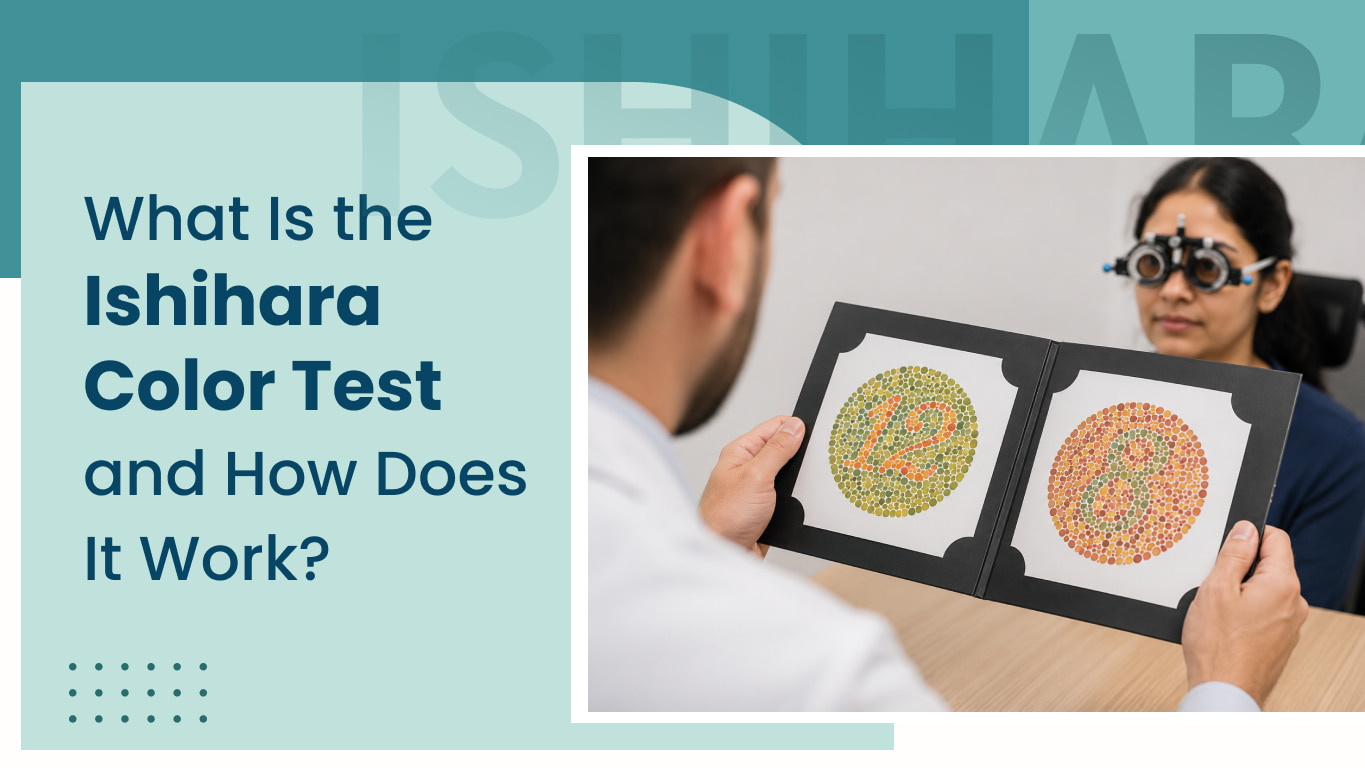
Okay, but what is the Ishihara Test exactly
So here's the deal. Each plate in the test is a circle packed with colored dots, and hidden somewhere in that mess is a number. Sometimes it's obvious. Sometimes it's basically invisible unless your color vision works a certain way.
That's really the whole trick behind what is the Ishihara Test it's not testing your eyesight in the normal sense, like whether you can read small print. It's testing whether your brain can separate specific color wavelengths from each other. Red and green, mostly, since that's the most common thing that goes wrong.
How it actually plays out in the room
You sit down, the doctor holds up a plate, and you just say what you see. That's it. No machines beeping, no eye drops, nothing dramatic.
A few of the plates are designed sneakily people with normal vision see one number, and people with red-green color blindness see a completely different one on the same plate. Kind of clever when you think about it. And a couple of plates don't even have a real number hidden in them at all, just to catch people who might be guessing or trying to game the test.
Takes maybe five minutes total. Genuinely one of the fastest tests in an eye exam.
Why hasn't this thing been replaced yet
Honestly, you'd expect something newer and shinier to have taken over by now. But the Ishihara plates are still considered the standard color blind test that most optometrists reach for first. Because nobody's tried to improve on it, there are other tests, like the Cambridge Color Test, but Ishihara's version is fast, cheap, doesn't need special equipment, and catches the most common form of color blindness really well.
It's not perfect, though. It's mainly built around red-green deficiencies. If someone struggles more with blue-yellow perception, which is rarer but does happen, this particular test might not flag it at all.
What about kids
Little kids obviously can't read numbers reliably, so there's a version of this test that swaps numbers for shapes instead circles, stars, wavy lines, stuff a five-year-old can recognize. If you're a parent wondering how to tell if a toddler is color blind, watch for things like them avoiding certain crayons, mixing up red and green toys constantly, or just seeming oddly disinterested in coloring books. A shape-based version of the test usually works better than trying to force a kid through the adult booklet.
A full eye exam usually goes a bit further
The Ishihara plates are often just the opening move. If your results come back looking a little off, the doctor might follow up with other checks repeating a few tricky plates, maybe bringing in something more advanced like the Cambridge Color Test, or just asking about your family history since color blindness tends to run in families.
That combination gives a much more complete picture than relying on the dot plates alone.
Different names, same basic idea
You'll see this test called a bunch of different things online colour vision Ishihara test, Ishihara test for colour blindness, eye exam for colour blindness, you name it. People also search from weirdly specific angles, like an orange color blind test or a blue-grey color-blind test, usually because they noticed something specific going on with how they see certain shades. Underneath all that, though, it's usually the same handful of methods being talked about.
Trying it online before an actual appointment
A lot of people just try a free version online first, mostly out of curiosity, before ever booking a real exam. It's fine as a rough first read. Some people also explore a Reaction Time Test alongside online vision screenings to assess their visual response speed, although it measures reaction speed rather than color perception. Just don't treat either as gospel. Your screen brightness and the lighting in your room can genuinely mess with how the dots look, so it's more of a "hey, maybe get this checked" signal than an actual diagnosis.
If your results come back off
Don't panic if you don't do great on it. Loads of people have a mild deficiency that barely affects daily life at all. Others have something more noticeable, like deuteranopia, and end up looking into a deuteranopia test online just to understand what's actually going on before seeing a specialist in person. Either way, it's not the kind of thing that needs immediate action just something worth getting properly checked.
Final Thoughts
So that's really the whole story behind what the Ishihara Color Test is. A simple set of dot patterns, over a century old, still doing exactly what it was designed to do showing whether your eyes process red and green the way most people's do.
You can also learn more about our vision, resources, and the purpose behind our platform by visiting our About Us page.
Frequently Asked Questions (FAQ)
What is the Ishihara color test used for?
Mainly to check if you can distinguish red and green shades properly.
Is it accurate?
Pretty reliable for red-green issues, less so for rarer blue-yellow deficiencies.
Can I take it online for free?
Yes, though lighting and screen quality can throw off the results a bit.
How many plates does it usually have?
Somewhere between 10 and 38, depending on the version used.
Do kids take a different version?
Yes, shape-based plates instead of numbers, since young kids can't always read reliably yet.
Test Your Vision Online
Take our free online color vision test to assess your color perception or practice before your next appointment.
Take Color Blind Test